EU AI Act: What Brand Managers Need to Know Now
AI is everywhere, but the mood is turning
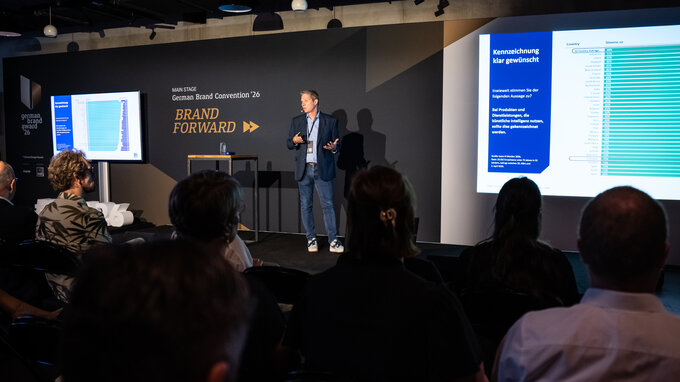
Global trend research by Ipsos shows clearly: 54% of people worldwide say that AI-powered products and services have already changed their lives. Over a three- to five-year horizon, this figure rises to 66%. Germany already sits well above average here, with 55% agreement. At the same time, scepticism is growing. In 17 of the 28 countries surveyed, fewer and fewer people say that the benefits of AI outweigh the drawbacks. Particularly surprising: nervousness in the US outweighs enthusiasm.
„In the US, there's noticeably more nervousness than enthusiasm towards AI-produced services and products. I find that extraordinary, because we usually like to look across the pond for inspiration.“
Gunter Theophile, study author, Ipsos
Asia — China above all — shows the opposite pattern: high enthusiasm paired with low nervousness. Europe sits moderately in between. For brand managers in the DACH region, this means: AI transparency is no longer a future project, regardless of the EU labelling requirement.
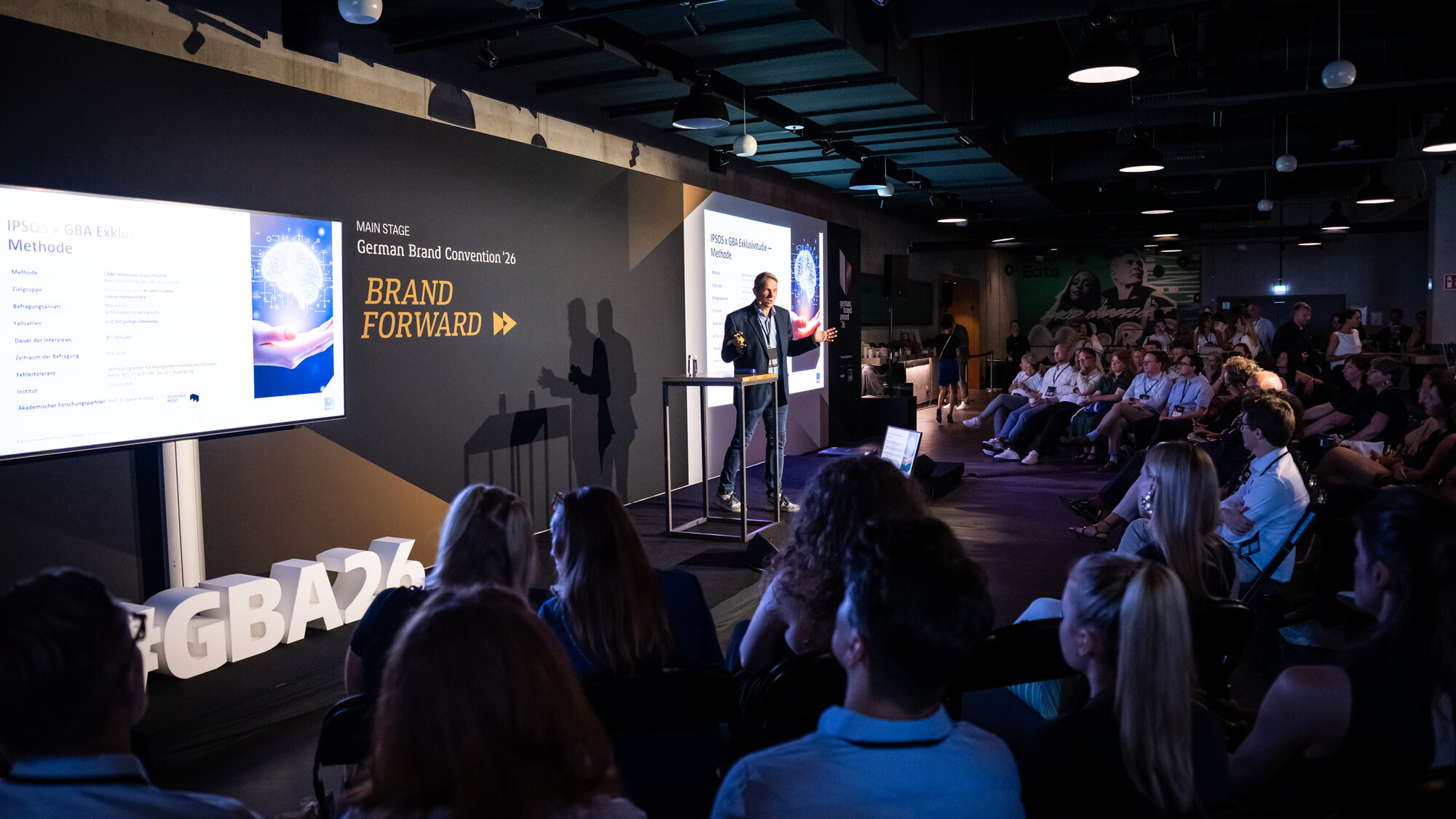
What the exclusive study measured
1,160 participants aged 16–55 each saw one of three versions of the same advert:
Version D: A real, non-AI-generated advert
Version E: An AI-generated advert without labelling
Version F: An AI-generated advert with AI labelling
The experiment was conducted across two industries with differing levels of consumer sensitivity: organic food (high labelling sensitivity) and consumer electronics (lower sensitivity).
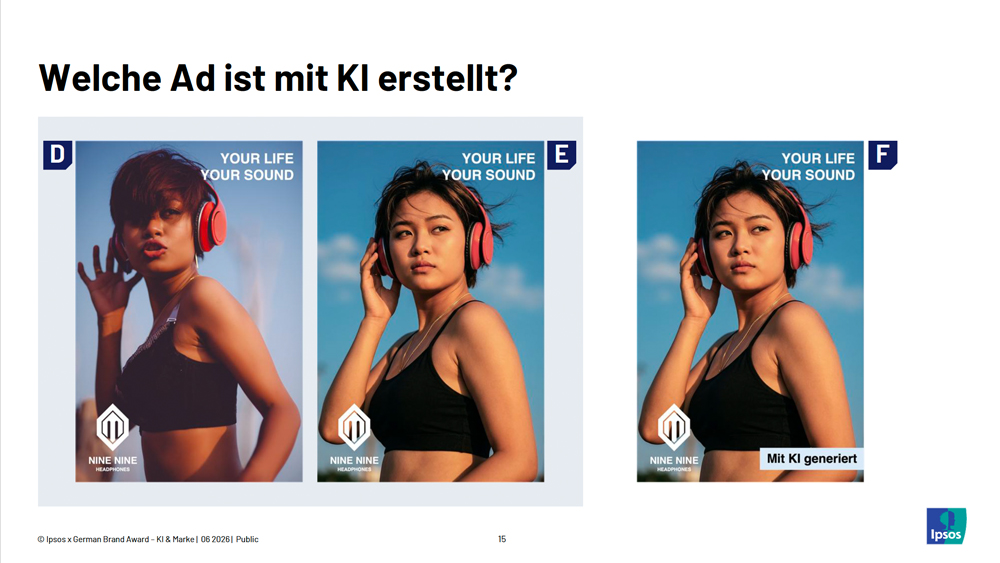
People can no longer reliably identify AI advertising
In the first step, participants were asked which advert was AI-generated. The result was striking: on average, only 44% answered correctly — a figure statistically below what a coin toss would produce. In other words: quality alone no longer protects against perception risks. Even high-quality AI creative can be perceived as fake, and vice versa.
“People simply no longer have any way of telling the difference.“
Gunter Theophile
Perception beats reality
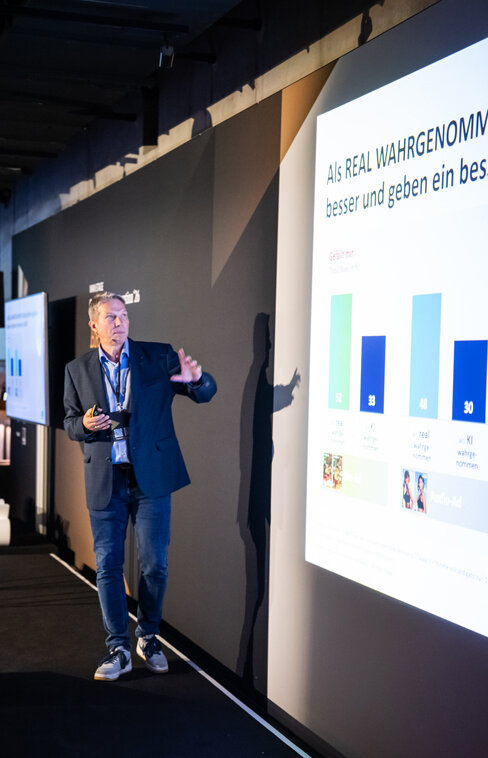
The actual experiment didn't assess what was genuinely AI-generated, but what respondents believed to be AI-generated. Advertising content perceived as real performed significantly better — regardless of whether it was actually real or AI-generated. It was better liked, seemed more natural, more coherent, more professional and more authentic, generated stronger emotional connection to the brand, and prompted greater willingness to act.
“It genuinely doesn't matter whether it was AI-generated or not. Perception is reality. The question is what the respondent thinks about the advert.“
Gunter Theophile
For campaign planning, this means: the benchmark isn't the technology, but consumers' perception of it. Those who evaluate campaigns from the recipient's perspective make better decisions.
“Labelling actually has an advantage“
AI adverts explicitly labelled as AI perform better than unlabelled AI adverts. However, there's an important difference between industries: in consumer-critical fields such as organic food, labelling measurably improves perception. In consumer electronics, however, the effect is barely measurable — neither positive nor negative. Labelling doesn't hurt, in other words. That alone is a good argument for using it as standard practice.
The study's findings send a strong signal to the branding world: AI labelling doesn't have to be seen as a regulatory hurdle. Used correctly, it becomes a strategic tool for trust, authenticity and campaign success.
In sensitive industries, transparency is non-negotiable (organic food, financial services, political communication). In less sensitive fields, it at least does no harm. The message is clear: those who label, win.
Brands that grasp this now have a genuine edge — not because they're complying with an obligation, but because they're actively building trust.
Three Practical Takeaways
- Always label. Even where the EU labelling requirement doesn't apply, voluntary transparency pays off. It benefits both perception and campaign performance.
- Actively mark real content, too. Consumers are growing increasingly sceptical and suspect AI content everywhere. It's therefore worth labelling genuine campaigns as well — for example with labels such as “Real“, “Human Made“ or “Made by humans with AI“.
- Think from the consumer's perspective. It isn't the creation process or the state of the art that determines a campaign's success, but how it's perceived. The recipient's lens should never be set aside.