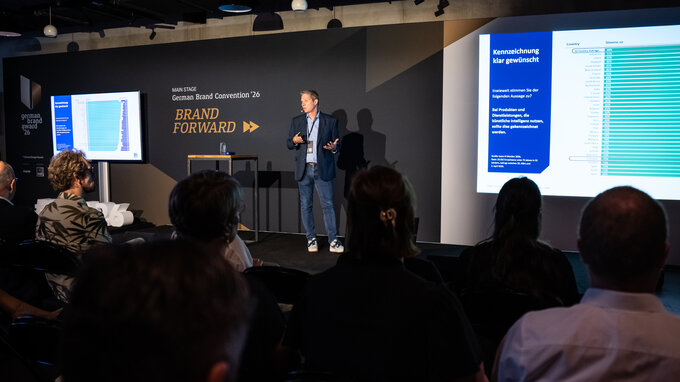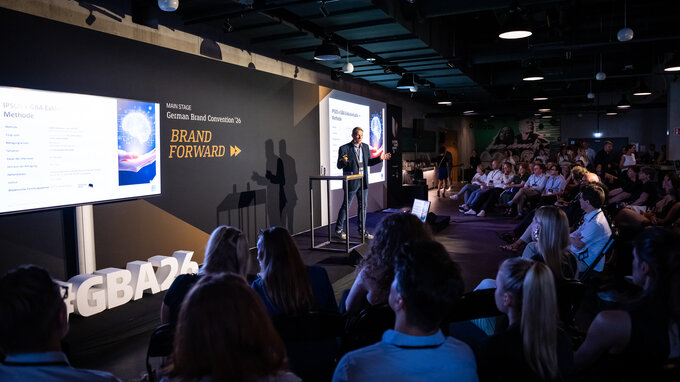
How AIre you? Three perspectives
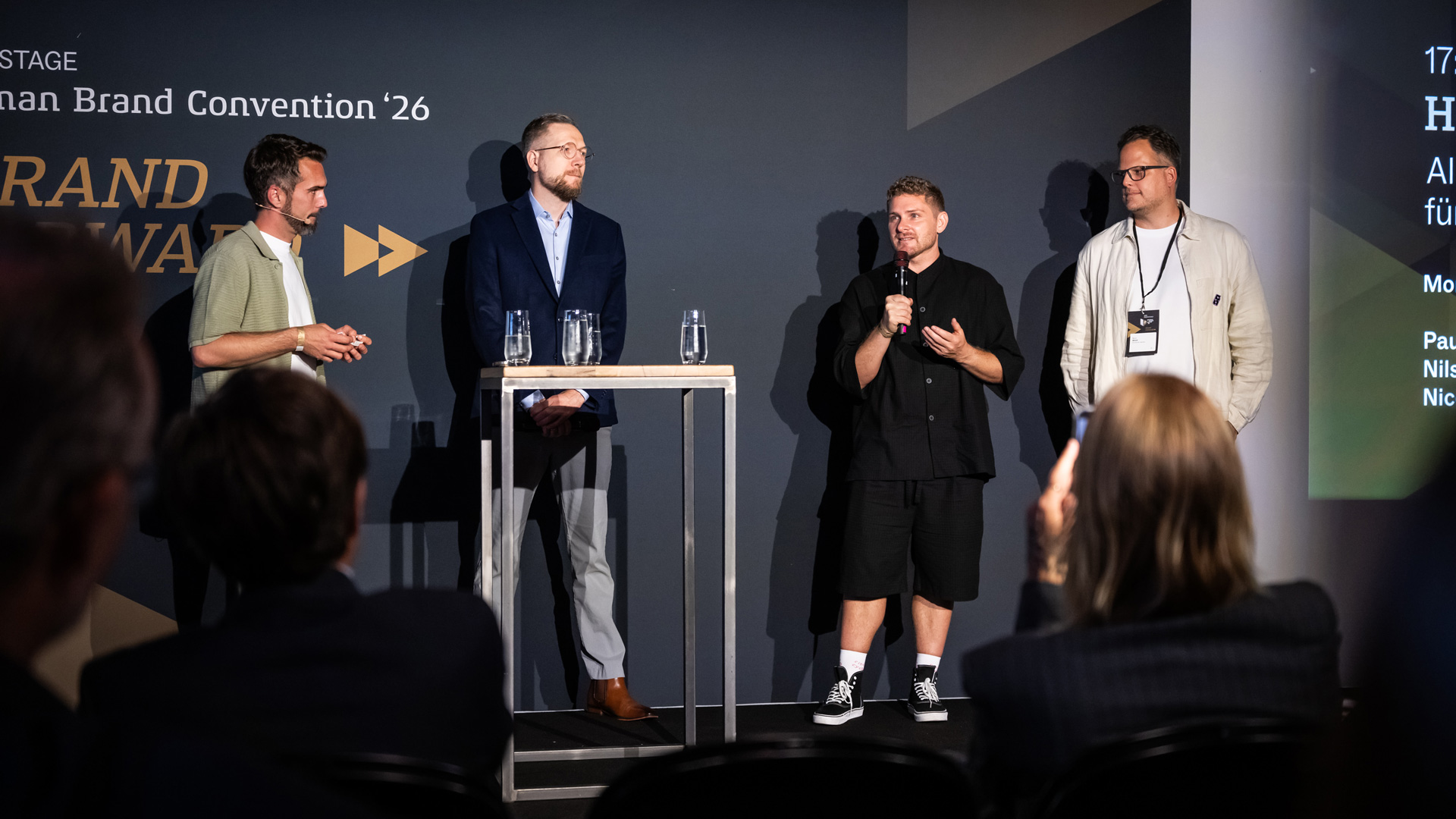
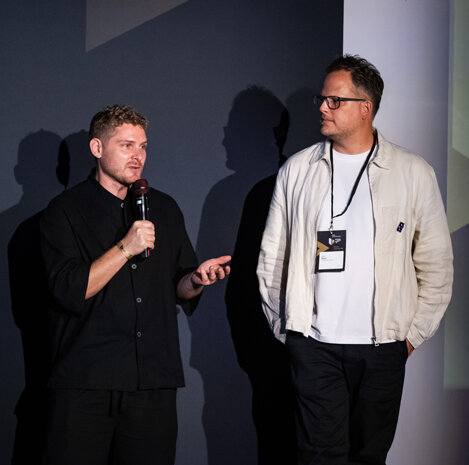
“What was your most recent ‘Oh no’ or ‘Aha’ moment when dealing with AI?” asks Moritz Piel (gmk Markenberatung) of his panellists. Paul Svoboda (Director and Head of UX Strategy and Design, Merck Group), Nils Hartmann (Chief Creative Officer and Managing Partner, Parasol Island) and Nico Wüst (Unit Lead and Head of Design Systems, Strichpunkt Identity) are initially in agreement: the question is no longer whether AI is finding its way into business processes. Rather, it is about the quality of its implementation – and the role that brands and people play in this.
Paul Svoboda responds to the opening question with a personal observation: “My young son asked me the other day: ‘Dad, is Claude your friend?’ That made me wonder what effect it actually has on us when we spend several hours a day talking to a computer that pretends to be a human being.” Nils Hartmann then recalls a global glitch affecting the AI chatbot Claude and warns against technological dependence and the concentration of power. Unlike the previous speakers, Nico Wüst strikes a more positive note and emphasises the creative turning point: the fact that people without any programming knowledge can write functional code using Vibe Coding was his ‘aha’ moment.
The paradox of the AI era: diversity and generalisation
The tools are the same for everyone. Anyone who still wants to stand out must take a different approach. For Nico Wüst, it’s obvious: given the same conditions, differentiation ultimately comes only from people. Nils Hartmann adds the necessary distinction between ‘human in the loop’ and ‘human in the lead’.
“We must be aware of when it is the human’s turn to make decisions that ruffle feathers, go against the statistics and create disruptive solutions.”
Nils Hartmann, Chief Creative Officer & Managing Partner, Parasol Island
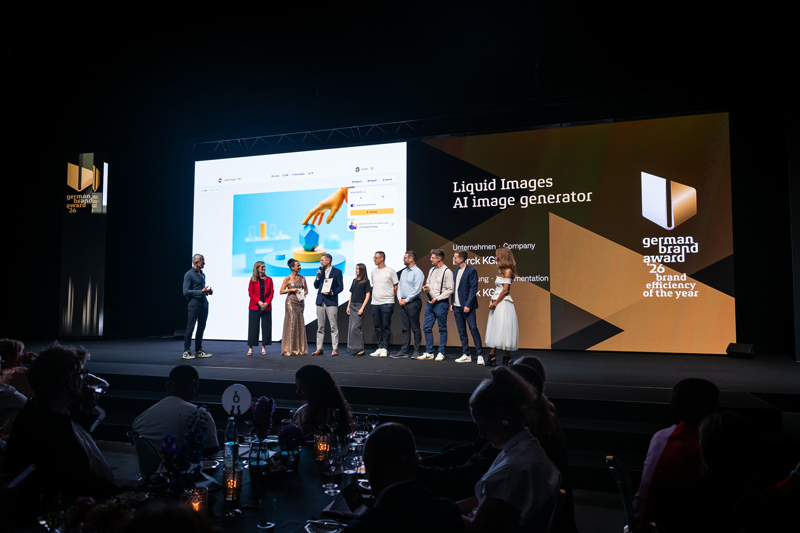
Merck tackles the issue of differentiation in its own unique way. An in-house image generator enables all staff to create content in line with the brand, thereby democratising the brand to a previously unattainable level. Given the widespread use of Large Language Models (LLMs) and in light of their inherent weaknesses, brand managers should be aware that: Brand guidelines with little room for interpretation and a clear positioning are essential for the widespread, brand-compliant use of AI. “We all know these things hallucinate like mad. And if brand wording is very flowery, anyone can pick out bits and pieces,” warns Nico Wüst. The expert in branding and design systems and his interviewees agree that the correct implementation of AI saves time and resources. However, anyone who uses the efficiency gains to cut costs is squandering the real opportunity. Nico Wüst recommends using the efficiency gains to improve quality, for example in product development or positioning. But not with a view to cutting jobs. Because “ultimately, it’s all about genuine relationships between people and brands.”
Parasol Island, on the other hand, has recently left around 20 posts unfilled as a result of the transformation, as Nils Hartmann puts it quite bluntly. Not to make cost savings as a matter of principle, but to invest in generalists with a strong willingness to learn. Paul Svoboda, responsible for user experience and design at Merck, then touches on something that is of particular interest to brand managers at long-established companies: within the pharmaceutical group’s structures, Prompt and the AI model never interact directly. Instead, there are several layers of control between the employees’ input and the result, including an “LLM as a Judge” set of rules, to prevent a poorly implemented AI from damaging the centuries-old brand.
AI readiness is a responsibility of brand management
The panel makes it clear: achieving collective AI readiness requires a willingness to act that goes beyond mere action – it demands conscious brand management and a corporate culture centred on people. Those who view AI as a tool for cost reduction and automation will achieve only mediocrity. Those who use AI to define brands more precisely, empower teams and improve quality will remain distinctive. Brand managers should no longer ask: ‘Do we have an AI strategy?’ but rather: ‘Do we have a clear stance on when humans lead and when machines do? And are we prepared to translate efficiency into excellence?’
Five Practical Takeaways
1. Define your brand identity clearly. AI readiness does not start with the technology, but with the brand itself. Brand guidelines that leave room for interpretation are misinterpreted by AI systems. If you want to be AI-ready, you must first have a clearly defined brand identity.
2. Human in the Loop vs. Human in the Lead. Not every task requires human guidance. Where disruptive decisions, strategic direction-setting or contrasting perspectives are required, that is where humans come into play.
3. Invest efficiency gains in quality. The time saved through AI should be channelled into better products, stronger identities and deeper customer relationships, not solely into budget cuts.
4.Think of quality assurance as architecture. Trust in employees is not enough. Anyone using AI in brand communication needs layers of control to ensure brands are not damaged.
5. Clarify the legal framework now. The EU AI Act comes into force in August 2026 with comprehensive labelling requirements. Brands should make proactive decisions now: Is AI-generated communication a good fit for my brand? And if so, how do I communicate transparency as a strength?