From Attitude to Hashtag: Five Lessons for Corporate Influencing
The Real Risk Does Not Lie in the Person
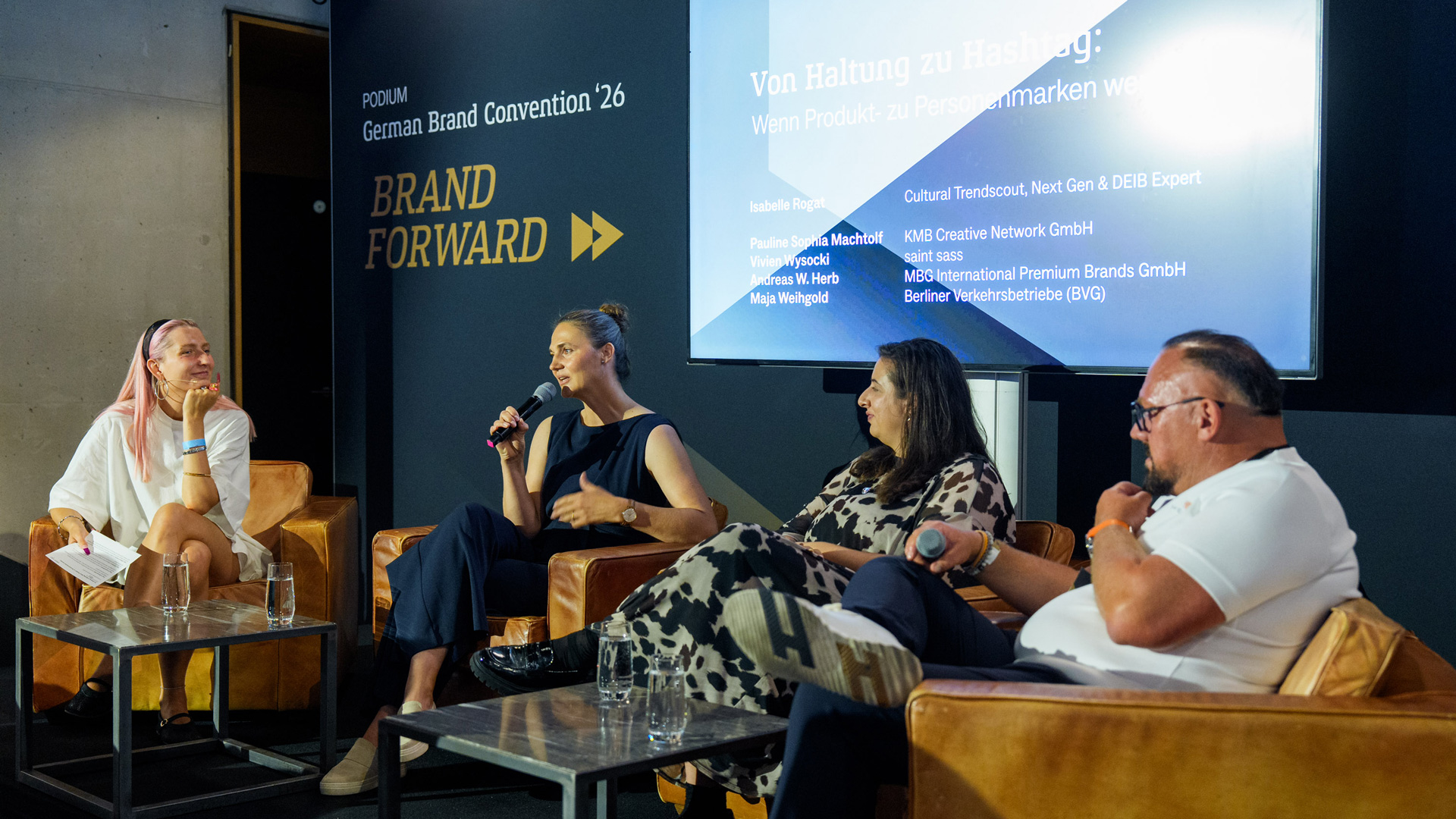
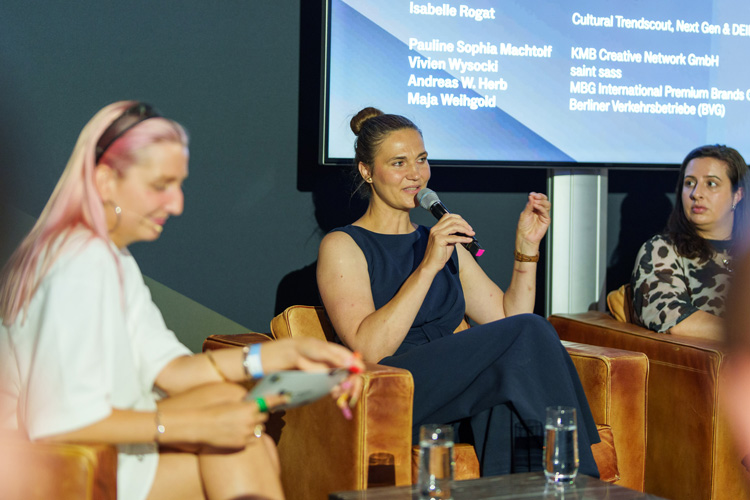
Host Isabelle Rogat opens the panel with a bold thesis: individuals are not the decisive factor behind unsuccessful or even image-damaging influencer marketing. Rather, companies bear the greatest responsibility for its success. Anyone who treats the people producing content on a company's behalf merely as an executing hand or an advertising surface should not be surprised later when that treatment itself becomes the problem. The author and expert in Next Gen and DEIB wants to know from her guests how it is done properly.
Handing Over Control, Taking on Responsibility: How BVG Creates Freedom
„Where does personal responsibility and authenticity begin in a state-owned company with 16,000 employees, and where does it end?“ she asks Maja Weihgold. The BVG communications chief runs a corporate influencer programme with 20 employees. Her approach relies on relinquishing control and fostering ownership: „Our influencers don't have to ask anyone for approval before posting on their accounts. But if they run into legal issues or questions, they can always come to us.“ As a company with close political ties, this is no small concession – but a deliberate one. The programme's aim is to create full transparency“ and show BVG passengers employees' everyday working lives directly.
„If I'm a bus driver, a tram driver or work in security, I can't also be filming little videos on the side. That's why our colleagues get paid time off to do this.“
From Sceptic to Personal Brand: How Visibility Became a Success Factor
Andreas Herb shares the same commitment to transparency and deliberately relinquishing control to corporate influencers: „I encourage every department head, every salesperson and even our apprentices to be visible on social media, and I tell them: ‚Make yourself a rock star!‘“ For the CEO of MBG Group (Salitos, Effect, Scavi & Ray), this visibility has proven to be a powerful recruitment lever, saving the company around EUR 700,000 in recruitment advertising costs to date. His employees' social media presence – and not least his own – works so well that the beverage manufacturer can barely keep up with the flood of unsolicited applications. Yet it was Herb himself who, until a few years ago, was convinced that business owners had no place on social platforms.
Asked about his original strategy, he says: „There wasn't one, because I simply didn't believe in it. Back then we told ourselves that if we ever reached 50,000 followers and maybe a million views, we'd have made it. Today we're annoyed if we don't hit 40 million views a month.“ On Instagram and TikTok, the multi-CEO now shares his working life with more than 550,000 followers combined and has become the figurehead of his own brands. Today's strategy? Approachability and transparency.
Letting Go as a Strategy: Growth Without Dependence on Individuals
For BVG, the employees gained through social media are more than a welcome side effect, says Maja Weihgold. Given demographic change, the transport company will need around 10,000 new employees in the coming years – some of whom it plans to attract through corporate influencers: „Through the visibility of these great people, we not only reach our passengers but also gain new employees. That's why our programme has made it all the way up to the executive board.“
Neither Herb nor Weihgold worries that employees they have supported might eventually be poached, or that their accounts might grow too large. Even if a corporate influencer leaves the company, the memory of them stays linked to the brand – an effect Herb compares to his own name: should he leave MBG tomorrow, some people would still identify him in ten years' time as „the vodka guy“ or „the prosecco guy“. And what brand wouldn't want that? Both speakers see their approach not as a loss of control but as proof of trust in their own brand. Pauline Sophia Machtolf, Head of Creator Management at KMB Creative Network, adds: „As in any other line of work, it's never particularly wise to make everything dependent on one person. That applies to corporate influencing just as much as to logistics.“ Following the example set by her fellow panellists, Machtolf therefore argues for always engaging several employees as corporate influencers.
Protection, Not Control: When Employees Become Targets
Despite the many positive effects, visibility online always has a downside too, as all panellists agree: defamatory and hurtful content in often unmoderated comment sections. Weihgold, by contrast, protects her BVG influencers with a multi-layered safety net comprising weekly office hours, regular legal advice, and psychological support and backing that reaches all the way to the executive board. Making this infrastructure visible is crucial, says Weihgold – „because otherwise, I can't motivate anyone to step out of the shadows for this company.“
Andreas Herb takes a different, more personal approach: he deliberately ignores general comments about his appearance or demeanour. When it comes to criminal or legally actionable attacks, however, he shows no tolerance whatsoever – the legal department takes over. This distinction between ordinary criticism, which one endures, and boundary violations, which are pursued consistently, is in his view the foundation of any healthy resilience. His advice to anyone building a personal brand: „If you want the fame, you have to live with the shame.“
Pitfalls Nobody Sees Coming
„Whether it's a personal brand or corporate – what would you have liked to know about influencing before you started?“ Towards the end of the panel, Isabelle Rogat turns to very concrete practical issues. Creator manager Pauline Sophia Machtolf, who has spoken to a sizeable LinkedIn community herself for three years, opens with an appeal: „We all stand before this Cringe Mountain – that uncomfortable feeling you get when sharing content. But the more you post and the more you dare, the better it gets. So my message to everyone is: go for it! Really, not much can go wrong.“
Less cringe-inducing but more time-consuming – and not always welcome – is the attention personal brand Andreas Herb receives. The sheer number of requests for photos in everyday life, whether at the delicatessen counter, while travelling or – as he candidly admits – even in the sauna. His conclusion is a pragmatic one: anyone who becomes publicly visible carries their face not only at work, but also in their private life.
For Weihgold, meanwhile, the biggest surprise of her influencer programme turned out to be a legal matter: as soon as private individuals appear as corporate influencers, every single one of their posts becomes subject to GEMA licensing fees – and the company is liable for every breach. It is a burden many programmes underestimate at the outset.
Conclusion: Trust Beats Control
According to this panel, corporate influencing does not work through directives, but through trust, clear guardrails instead of rigid scripts, and a protective infrastructure that steps in when it matters. Companies that treat employees as co-creators rather than advertising space gain credibility, reach and – in BVG's case – even tangible recruitment advantages.
Five Takeaways for Practice
- Treat employees as co-creators. Companies that use corporate influencers merely as advertising space squander credibility. Real impact comes from partnership on equal footing.
- Provide guardrails, not scripts. Approval processes stifle authenticity. Clear frameworks and the ability to ask questions at any time work far better.
- Build protective infrastructure. Legal advice, psychological support and clear escalation paths need to be in place from the start – not only once the first backlash hits.
- Recognise visibility as a recruitment lever. Corporate influencing can replace job adverts and actively boost applications – an effect that goes well beyond marketing.
- Think through legal pitfalls early. Issues such as GEMA licensing and disclosure obligations for corporate content are often underestimated and should be clarified from day one.