Now, More Than Ever: How Branding Works in a Crisis
An Orientation Crisis, Not Analysis Paralysis
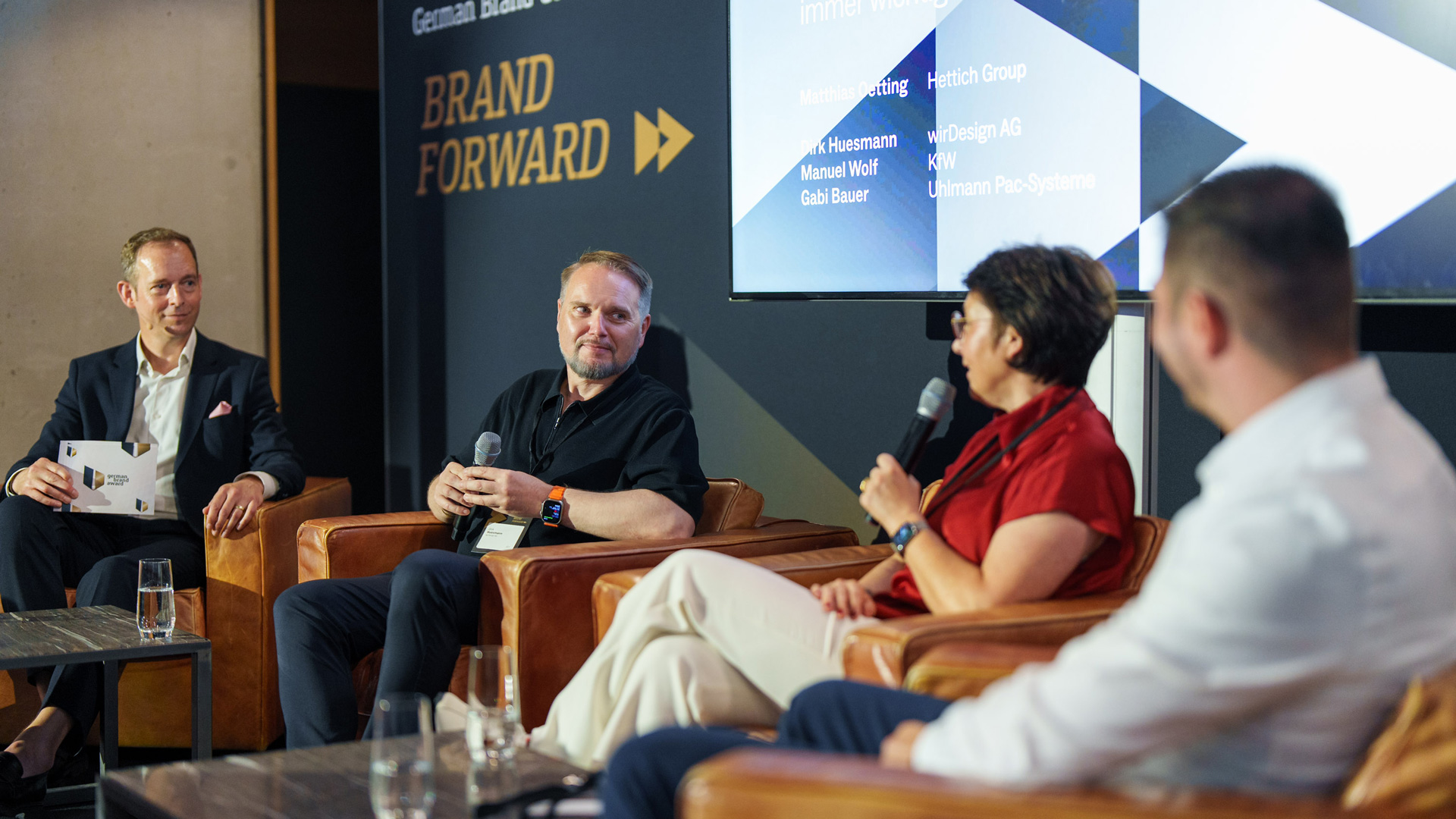
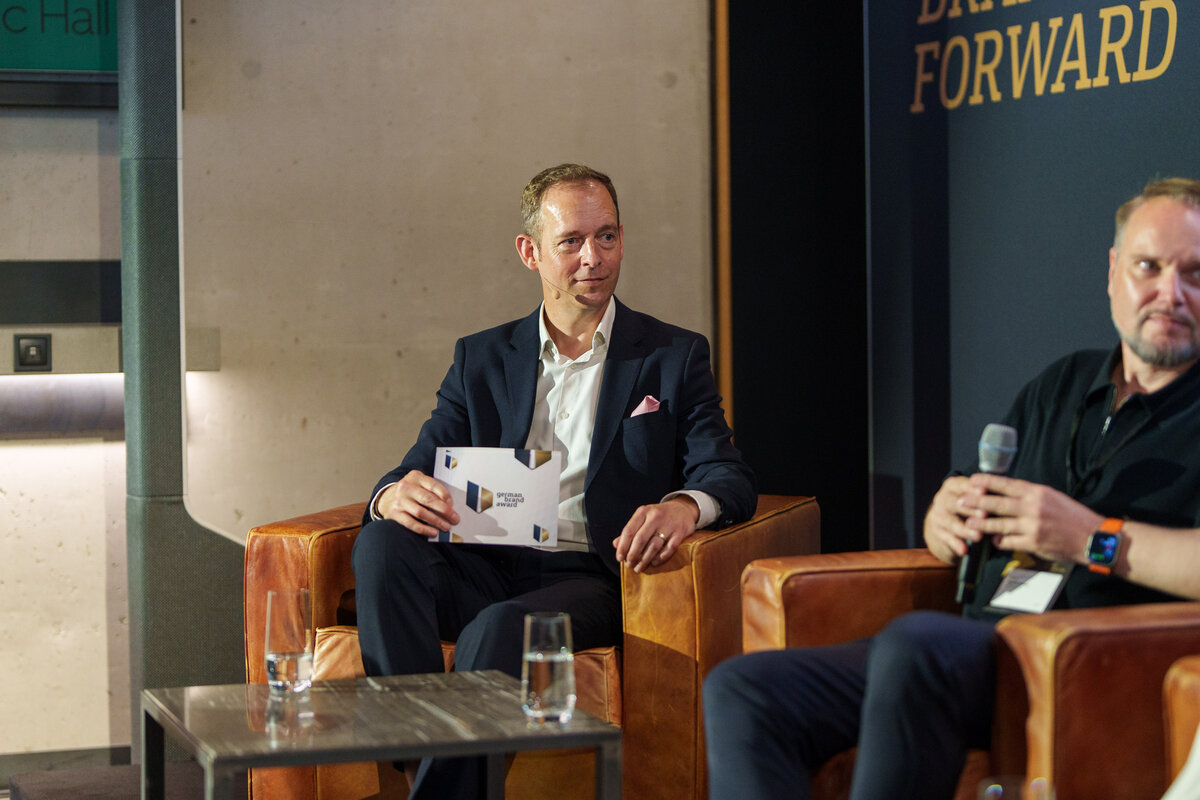
Matthias Oetting, Global Marketing Director at Hettich Group, opens the panel with an uncomfortable observation: uncertainty within companies is growing, even though the data is often nowhere near as dramatic as the feeling it triggers. He asks Gabi Bauer, who has weathered crises and is responsible for operational marketing and strategic planning at Uhlmann Pac-Systeme, where things tend to fall down – in analysing the problem, or in implementing solutions. Her answer: at the packaging machinery manufacturer, the problem doesn't lie in a lack of knowledge about the market. According to Bauer, companies know exactly what's happening around them. Where things get tight is in their own positioning – in other words, the question of what they stand for and where they actually want to go. That's precisely why brand becomes so important in times of crisis: it creates orientation internally and trust externally. Anyone who merely manages costs without developing their own positioning, in Bauer's view, is simply working around the crisis rather than actively shaping a way out of it.
“I'd Happily Take Your Problems“
Dirk Huesmann adds an agency perspective, arguing that it's less about standing out from the competition than about a more fundamental question: “What problem does my brand business actually solve?“ According to the wirDesign CEO, anyone who can answer that clearly holds a powerful tool. “I'd happily take your problems,“ he often tells people in conversation – because unsolved problems bring opportunities for new, better solutions. At the same time, Huesmann warns against pitting change and everyday business against one another. Companies today, he says, must manage both at once: keeping well-oiled day-to-day operations running while remaining ready to transform fundamentally. What he means is “organisational ambidexterity“ – the ability to run day-to-day business and transformation hand in hand.
The Ferrari Lesson: Why Consistency Matters More Than Courage
„Was the launch of the electric Ferrari Elettrica a good idea in terms of brand strategy?“ moderator Matthias Oetting asks the audience. Four hands go up. Dirk Huesmann puts the combustion-engine debate into context – one that now even affects an exceptional brand like Ferrari. He questions whether enough thought was given beforehand to what essentially defines the Ferrari brand: the extraordinary, the things others didn't dare to do. Oetting adds that shortly after the blue electric car's unveiling, the marketing director had to leave, and hands over to Manuel Wolf, who states plainly: “Brand lives on consistency, and that consistency is missing here.“ In the view of the Head of Strategy, Brand & Governance in KfW's group communications, the move wasn't made from a brand perspective at all, but out of social or commercial pressure. Anyone who takes such a path, he argues, then has to see it through consistently – backtracking shortly afterwards damages a brand more than the original decision itself. Gabi Bauer, too, views the case from her B2B perspective as an example of brand development that wasn't thought through to the end. A zigzag course, in the end, costs a brand the trust of its customers above all.
“Brand lives on consistency, and that consistency is missing in the case of the Ferrari Elettrica.“
Manuel Wolf, Head of Strategy, Brand & Governance in KfW's Group Communications
When Your Own Seal of Quality Starts to Wobble
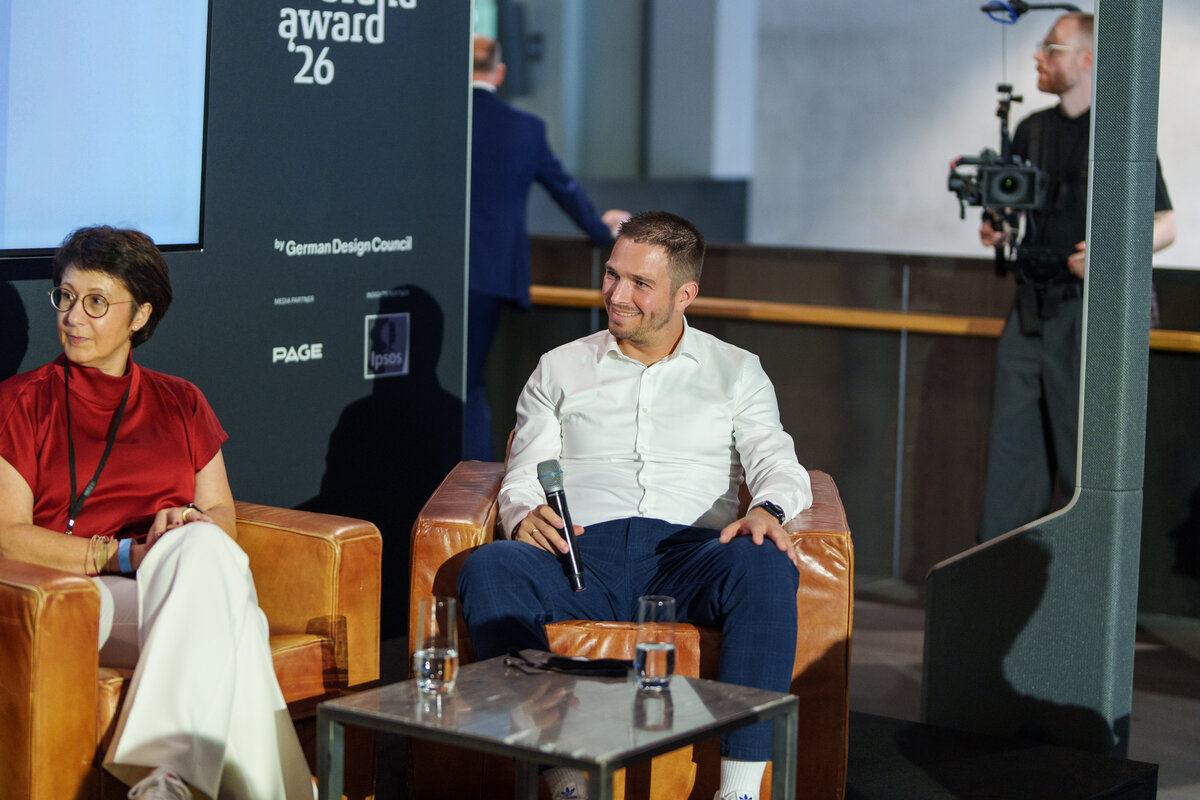
Dirk Huesmann turns attention to a problem that, in his view, weighs on many German companies in addition to their own brand work: the brand “Germany“ itself. Conversations with partners in Shanghai show him how the shine of German products is fading, while “Made in China“ has long since become a quality seal in its own right. This puts the very brand promise that German industrial brands have long been built on – engineering, precision, quality – under threat. Huesmann remains optimistic nonetheless: the foundation for competitive products is still there, but Germany needs to present itself as considerably more innovative and defend that brand promise. Oetting addresses the collective self-image at play: “Before talking about their brand, do German companies first need to clarify whether having the best product is still even a competitive advantage?“ In response, Gabi Bauer diagnoses German industry with a hunger it has lost – one that other economies demonstrate every day. If companies that have grown comfortable after years of economic prosperity were to regain that hunger, a brand with a clear purpose could lend powerful support to that path forward.
Who Moves First: Strategy or Brand?
Having arrived at the question of necessary transformation, Matthias Oetting finally raises a dilemma increasingly described in the trade literature: while company leadership waits for impulses from the brand department in order to develop further, the brand department in turn waits for a clear strategy to align itself with. And in the end, nothing happens. Dirk Huesmann confirms this pattern, but also points to large companies such as Bayer that have already learned from it. In the past, a brand strategy would typically remain unchanged for a long time while products were developed in parallel and independently of it. Today, that alignment has to happen continuously. Huesmann therefore prefers to describe the current situation not as a crisis but as a new permanent state – one that allows no going back, and in which corporate resilience means continuously adapting to whatever new state comes next.
Conclusion: Orientation as a Shared Goal
Ludwig Erhard is often credited with the saying, “The economy is half psychology.“ The panel's discussion confirms this observation in its own way: uncertainty tends to stem less from hard facts than from a lack of orientation. Manuel Wolf closes with an important point that grounds the whole debate: brand is hugely important, he says, but it doesn't work without the product as proof. It has to be managed sensibly, without jumping on every new trend. The crucial question remains: what problem are we solving today, and what problem should we be solving in future?
Six Takeaways for Practice
- Positioning before cost-cutting. Anyone who only cuts budgets is merely managing the problem. Anyone who invests in their own positioning actively shapes the way out of a crisis.
- Lead with both hands. Keeping day-to-day business stable while enabling radical change at the same time: corporate ambidexterity becomes a prerequisite in times of crisis.
- Consistency protects. Bold repositioning can fail if it isn't carried through. A zigzag course damages a brand more than a clear, even controversial, decision.
- Challenge national brand promises. Even where a seal of quality like "Made in Germany" has lost some of its power, it's worth defending that brand promise with bite and innovative strength.
- Bring strategy and brand into dialogue. Companies that make their structures more flexible can align brand and strategy continuously, rather than in rigid cycles.
- Attitude over comfort zone. Where it exists, a brand with a clear purpose can make corporate hunger visible and carry it forward.