Live beats Likes: Why brand experiences are about more than just attention

From Storytelling to Storyliving
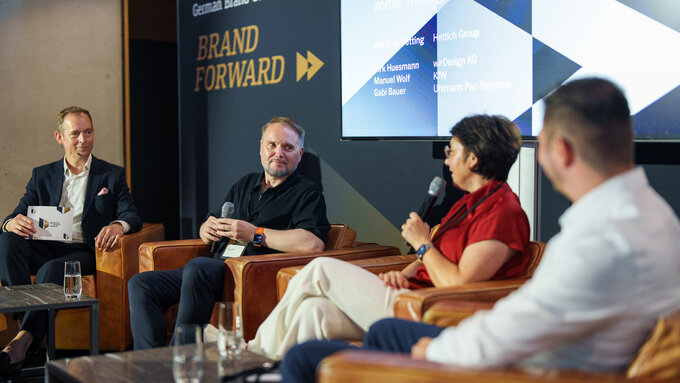
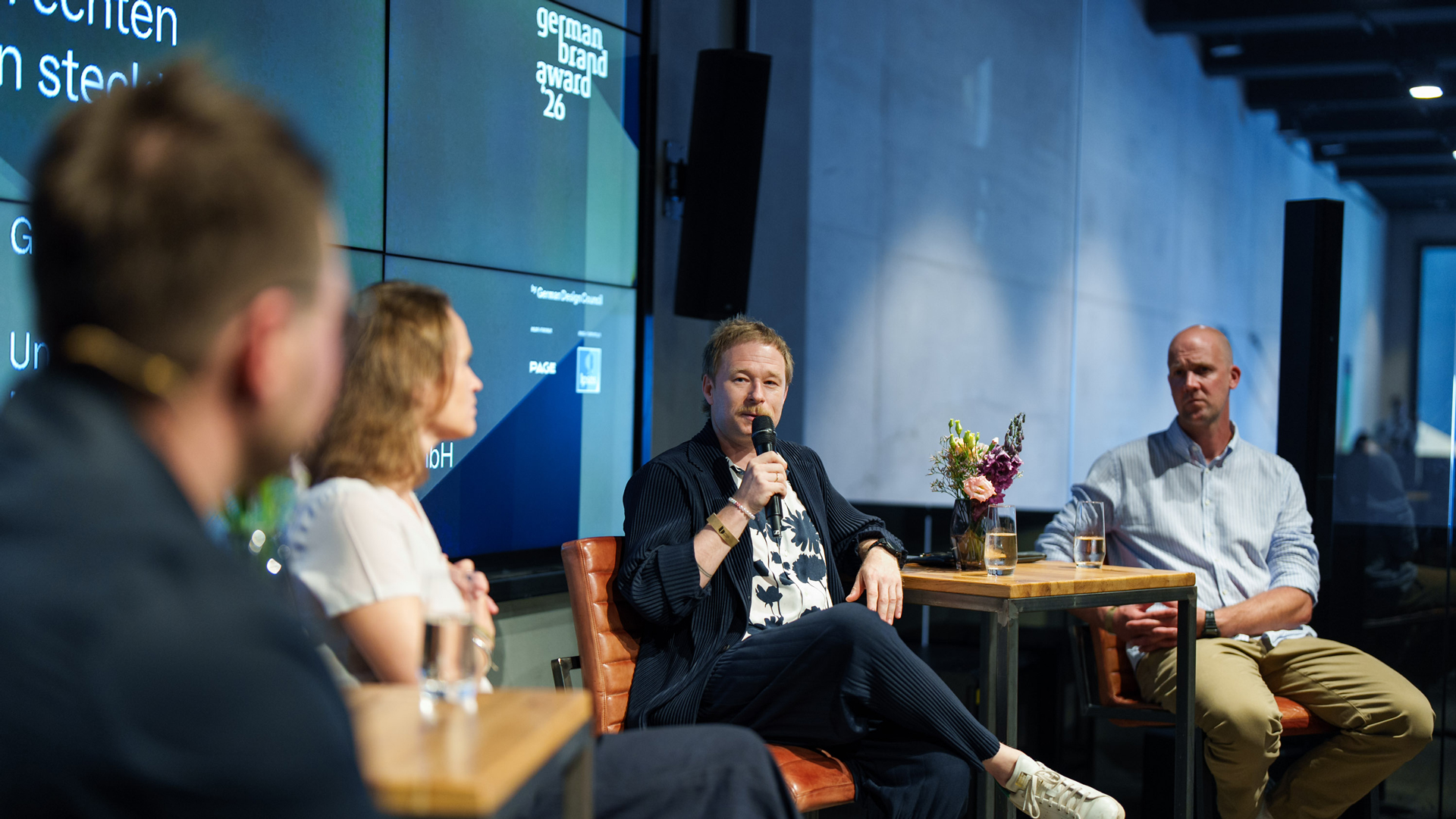
Florian Kleinsteuber from the German Design Council opened the panel with a thesis: storytelling is increasingly being replaced by storyliving. Dr Hannah Leimert, who researches and teaches brand management and communication at the University of St Gallen, disagreed with him. As an advocate of holistic brand communication, she does not see storytelling and storyliving as an either/or situation, but rather as two approaches that complement each other.
In Storyliving, a brand is not merely conveyed through audio and text, but can be experienced through all five senses. For Leimert, the advantage lies in the fact that it engages people more deeply and thus leaves a lasting impression. And in her view, this is precisely what experiential and event marketing should aim to achieve – making a brand tangible on various levels, so that consumers are left with a clear sense of what a brand stands for and what it means to surround themselves with it.
Leimert, who puts this into practice herself as Team Lead for Marketing and Communications at the Zurich-based start-up Zuriga, illustrates this point with a simple comparison: if you ask people whether they have a closer relationship with Apple or Microsoft, the answer usually favours Apple. Even though both products are used with similar frequency in everyday life. For her, the difference lies in the physical product experience through which Apple has always conveyed its brand.
Long-term focus rather than one-off events
Johannes Brunken (Team Lead Experiential Marketing, Mast-Jägermeister Germany) brings the brand slogan ‘The night is yours’ into play. For him, the key to success lies not in the finished event idea, but in the entire process: Jägermeister does not draw up ready-made concepts and then look for suitable partners; instead, it develops an idea in collaboration with artists and communities right from the start. In his view, this results in unique formats that cannot be replicated – and which ultimately generate cultural relevance within the respective communities.
Matthias Kern (Co-Founder and Managing Director, Mikado Culture), whose agency works with clients including Jägermeister, Amazon Music and Spotify, sees this determined approach as the key difference compared to brands that only turn up at a music festival for a year or two before disappearing again. For him, this is linked to reliability, a long-term approach and attention to detail – and to a willingness to involve communities in the ideation process right from the start.
Kern makes a clear distinction between an audience and a community: an audience can be bought or engaged in the short term through reach. A community, on the other hand, requires greater involvement. In his view, it calls for genuine dialogue rather than one-way communication, as well as an understanding of the codes and needs of the respective community.
“Brand experiences should be fundamental. Creative excellence is what sets brands apart from one another.”
Dr Hannah Leimert, University of St Gallen
“Does building a community still offer any advantage at all, now that every brand is doing it?”, Kleinsteuber asks. Leimert counters this with an analogy: if all brands focus on sustainability, that no longer automatically sets them apart – yet it remains indispensable nonetheless. For her, the brand experience is a must-have, not an inevitable distinguishing feature. Not every brand needs to become the centre of a community. What matters far more is being culturally rooted and present in the right circles. For Leimert, how a brand achieves this depends on the right format, consistently nurturing relationships and understanding the issues that matter to the respective communities.
A sense of belonging rather than attention
Kleinsteuber remains focused on the competitive landscape and makes a pointed observation: in his view, brands no longer compete primarily for attention or visibility, but for a sense of belonging. Kern revisits the distinction between audience and community: a large audience helps in the short term and in a one-sided way – though, in his view, attention spans are at rock bottom anyway; which is why, for him, it is no longer about reach, but about engagement. From this observation, he draws a conclusion regarding the traditional marketing funnel: because too many brands are vying for attention that is scarcely available any more, he prefers to focus on experiences, co-creation and community-relevant content. From there, a message can be conveyed outwards via all other channels, which he believes remain important. Johannes Brunken sums up the discussion: “People are more attentive when they feel they belong.”
The real world is gaining in importance
Towards the end, Kern makes an observation that hangs over the panel: in his view, the digital is currently losing ground to the analogue. Not because it is disappearing, but because real-life experiences are gaining in importance – fuelled in part by concerns about artificial intelligence or social media overload. He expects brands to invest significantly more in real-life experiences in the coming years.
“Ever since the coronavirus pandemic, we’ve seen that young people are incredibly eager for genuine moments and genuine emotions with friends.”
Leimert confirms this assessment in light of her research: budgets are already shifting in this direction. In her view, however, this cannot completely replace the digital world – ultimately, she believes it comes down to a mix of both.
Six practical takeaways
- Experience over narrative. Brands that can be experienced with all the senses leave a stronger impression than those that are merely talked about.
- Share responsibility. Those who involve artists and communities from the outset, rather than imposing ready-made concepts, create unique and culturally relevant formats.
- Consistency over event-hopping. Long-term commitment and attention to detail carry more weight than short-term festival appearances.
- Brand experiences are becoming a must-have. Genuine differentiation arises from creative excellence and consistency.
- Use scarcity in a targeted and credible way. Scarcity only works if it is planned and communicated honestly.
- Belonging over reach. Those who invest in dialogue and engagement rather than just visibility build stronger brand loyalty.