“It’s all very well to say that brands need to take a stand”
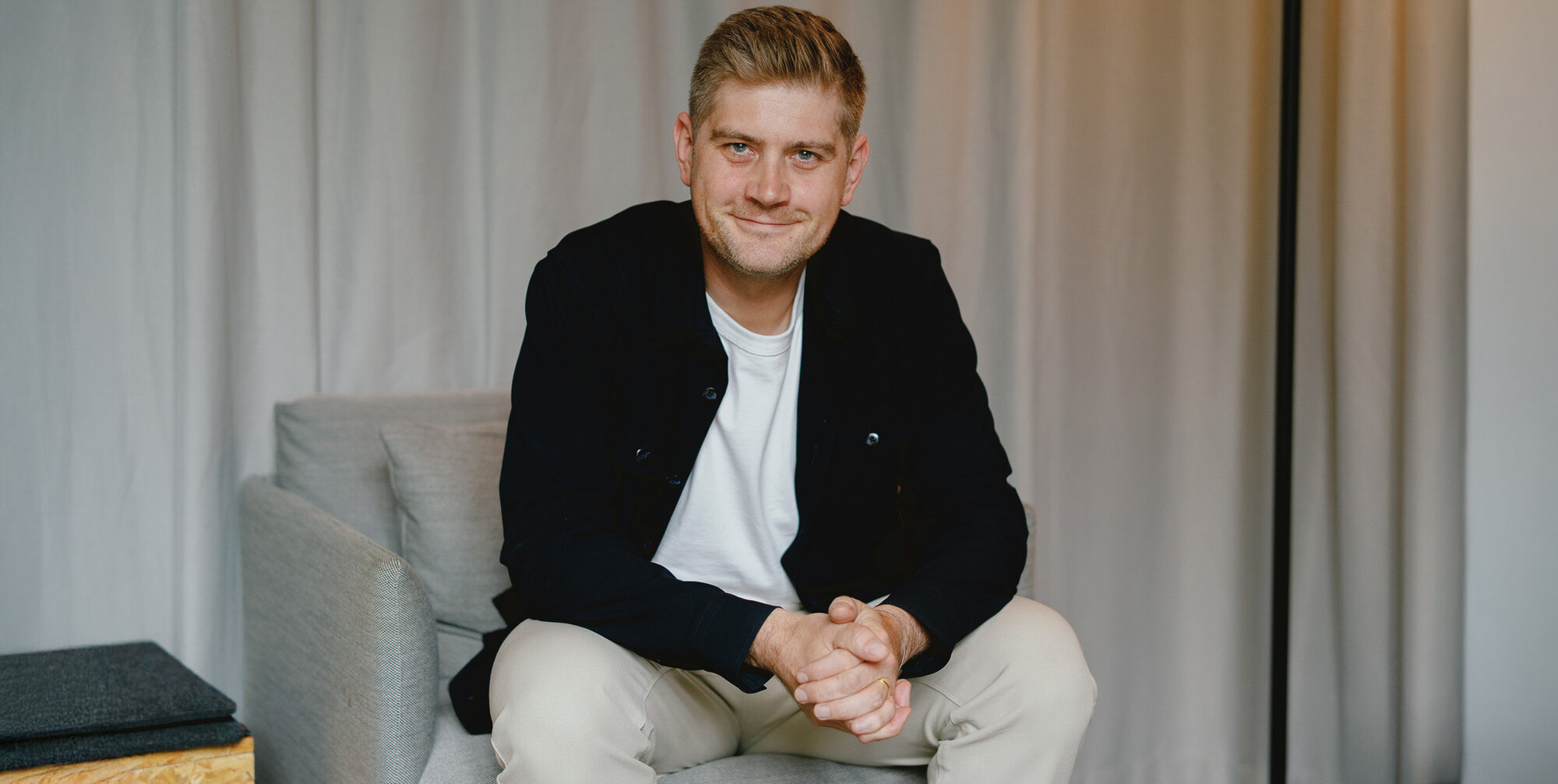

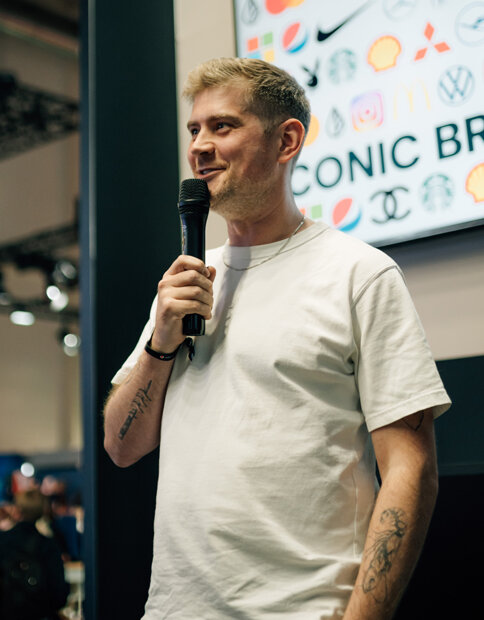
Interview with Henning Klimczak
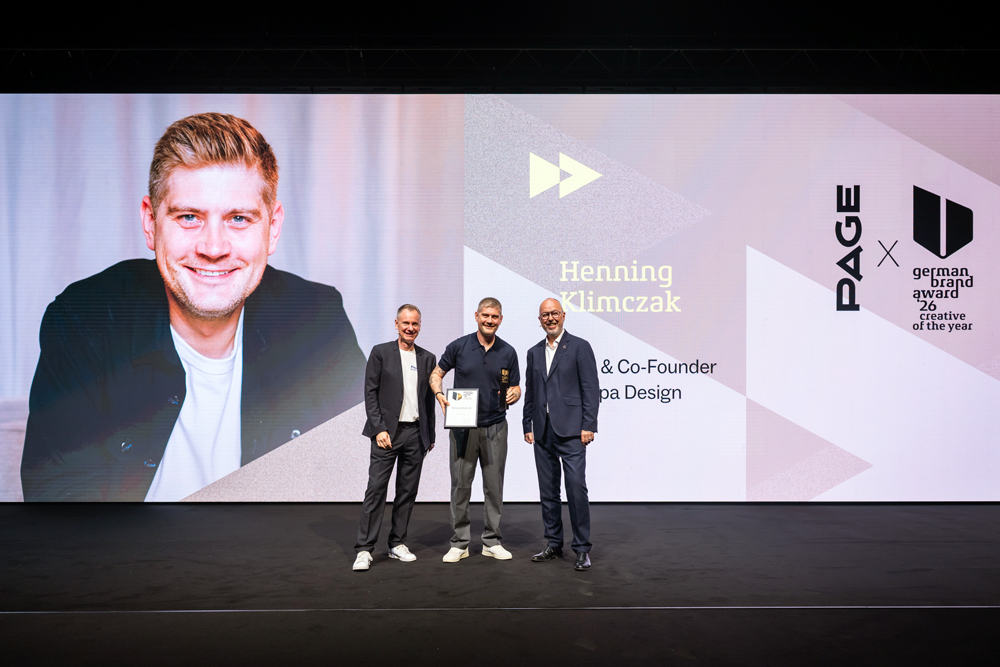
Congratulations on being named “Creative of the Year”! With this honorary award, the German Brand Awards recognise a creative figure who develops outstanding brand identities from the strategic DNA of brands and, thanks to their distinctive style, imbues them with differentiation and a lasting impact. What does such an award mean to you?
I’m incredibly proud of this award because I see it as recognition of the journey we’re taking together at Sherpa. The fact that it’s the result of a community vote makes me all the more delighted. Six colleagues were nominated for the online vote, and they were then put forward for selection on the PAGE Hub. Apparently, I managed to convince the community to vote for me and Sherpa. This is a personal milestone for me.
As a member of the German Brand Award Jury, I can reveal that shortlisting the finalists was no easy task. So I’d be interested to know: what, in your view, makes a brand that moves people?
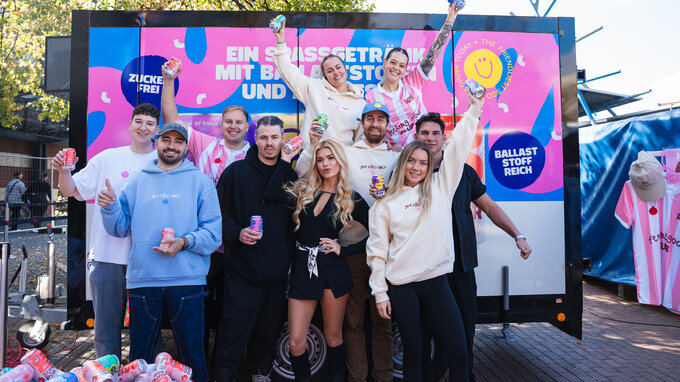
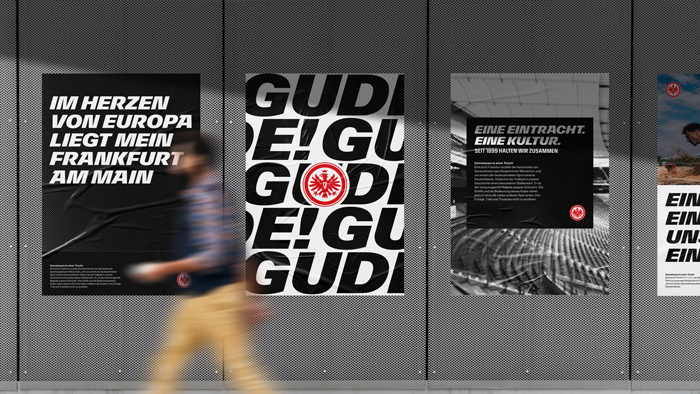
Brands that make a difference help us make everyday decisions. A certain ethos, signalled by a brand, is essential in this regard. Take Tony’s Chocolonely, for example. This chocolate brand breaks with many conventions by championing fair supply chains and better working conditions in the cocoa industry. This is communicated not only by a Fairtrade certificate, but by the entire product and packaging design. Compared to ordinary chocolate bars, Tony’s Chocolonely’s bar, for example, is not divided into equal pieces, but serves as a reminder of the unfair distribution of power and money in the chocolate industry. The mission is then set out on the inner wrapper and highlighted by a sticker on the word mark. Tony’s Chocolonely stands out to me as one of many well-known brands because I’m convinced by the holistic nature of the product. How much a brand can inspire, in turn, depends on the product or service itself. For example, we had a client who manufactures cleaning products for waterbeds. By its very nature, the product offers less potential for identification – nor does it need to, as it serves a clear purpose. The situation is quite different with Eintracht Frankfurt, whom we have been working with for six years: this example clearly shows how much inspiration depends on identification.
How does a brand use design to inspire consumers and communicate its values credibly?
At Sherpa, we always view design as a means to an end, never as an end in itself. Through our design, we bring brands to life, convey values and reinforce strategies. It’s all too easy to say that brands need a sense of purpose. After all, this isn’t possible without perseverance and a clear goal in mind. Only when a brand stands by its values in the long term – and is prepared to take the hard road to do so – does it remain strong and credible. A good example of this is Fritz Kola. The Hamburg-based company consistently applies its values across all touchpoints – from the self-description ‘independent and wide awake’ on the bottle to campaigns against right-wing extremism. A few months ago, however, criticism rained down when Fritz Kola sponsored soft drinks at the CDU’s federal party conference. I find the debate over whether this sponsorship still fits with the brand’s image incredibly interesting – because there’s no simple answer here. You always have to look closely at the motivations and the actual positioning. This example shows just how challenging it really is to put a brand’s values into practice.
Purpose and stance are increasingly the responsibility of management. This gives rise to a range of viewpoints, hence the crucial question: does a brand absolutely need a stance in order to make an impact? Or can’t this be achieved with other motivations?
A brand must fundamentally be able to explain what it stands for – for itself, for its partners and for consumers. There is only one answer to this: stance. Without an internal compass and without an identity that is projected outwards, it becomes difficult to differentiate oneself from the competition in the long term; co-branding ventures are less successful and influencer collaborations backfire. A purpose may be formulated by management, but it is only the brand’s stance that shows whether a brand truly lives up to it.
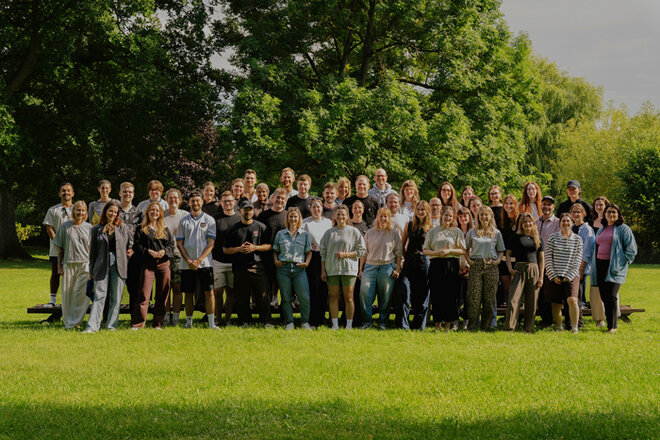
Sherpa has grown from a flat-share project with friends into an 80-strong branding agency. How did you build this brand?
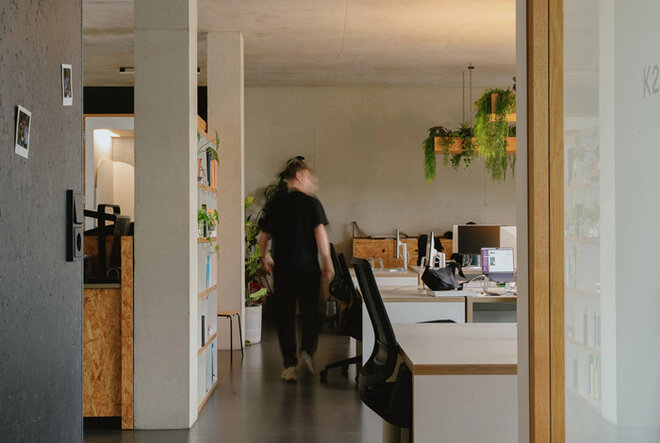
Back then, at the age of 25, we had agency jobs where we felt comfortable, but which didn’t allow for personal development. Without wanting to dwell on our complaints, we therefore decided to set up our own business. We were firmly convinced that creative people can deliver the best quality when the working environment allows it. When it came to choosing a name, too, we wanted to do things differently from the big agencies, where the founders’ surnames are usually a central part of the name. In our search for a name that an entire team could potentially identify with, we came up with ‘Sherpas’. This Himalayan people are known for supporting mountaineers on high-altitude expeditions. They lighten the load, show the way and accompany their partners all the way to the summit.
How did you formalise this founding story?
We help people reach the summit. In other words, we treat our partners as equals and share their high standards. On this basis, we develop strategies for top results. That doesn’t mean we simply drop our clients off by helicopter and then disappear. We are committed to fostering long-term partnerships, which in turn leads to sustainable success.
Could you elaborate on this approach a little?
We help companies to discover, refine and articulate their identity. Our work doesn’t take place in a meeting room, nor is it something that can be achieved in a single workshop. It is based on understanding and distilling the essence of each project. To this end, we first and foremost hold discussions with staff at various levels and observe the organisation from the inside. In doing so, we always ask ourselves: How can we make a difference here? What is the specific problem? What do we want to achieve through this collaboration? How can we get the whole workforce on board whilst pursuing overarching goals? Ultimately, we work attentively and patiently, confident in the knowledge that every company harbours certain ‘gold nuggets’ that will shine through sooner or later.
So every project begins with a deep dive and definition. Do your clients find it easy to hand over control of their identity? Or do you encounter resistance?
Our scope for action varies depending on the size of the client. The dynamics when working with international corporations are, of course, very different from those when collaborating with medium-sized companies and start-ups. Regardless of that, rebranding is always a highly charged and sensitive issue, which doesn’t make the job any easier. We see ourselves as a sparring partner who doesn’t simply impose an identity, but develops it together with the company.
What does it take to turn a defined identity into a perceptible one?
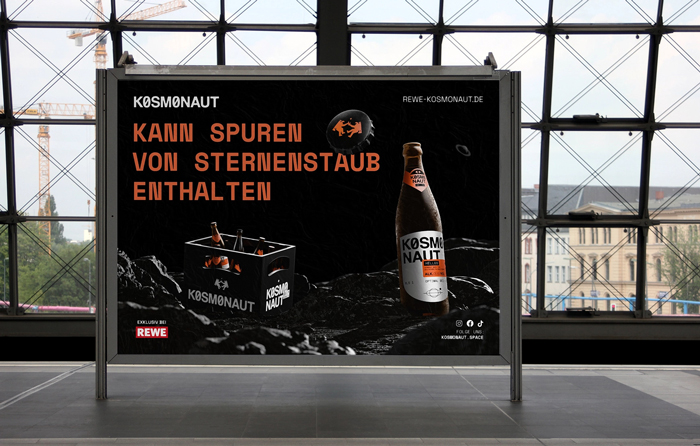
Even the best strategy is of no use if it isn’t made tangible. To translate brand identities into modular and dynamic design systems, we start by using the Brand Compass, a model we’ve developed ourselves. For some clients, it also helps to think together about what the brand would be like as a person. We draw on these two tools time and again throughout the process. Further down the design process, of course, the strategy should never be neglected.
How does your approach fundamentally differ when dealing with different organisational structures?
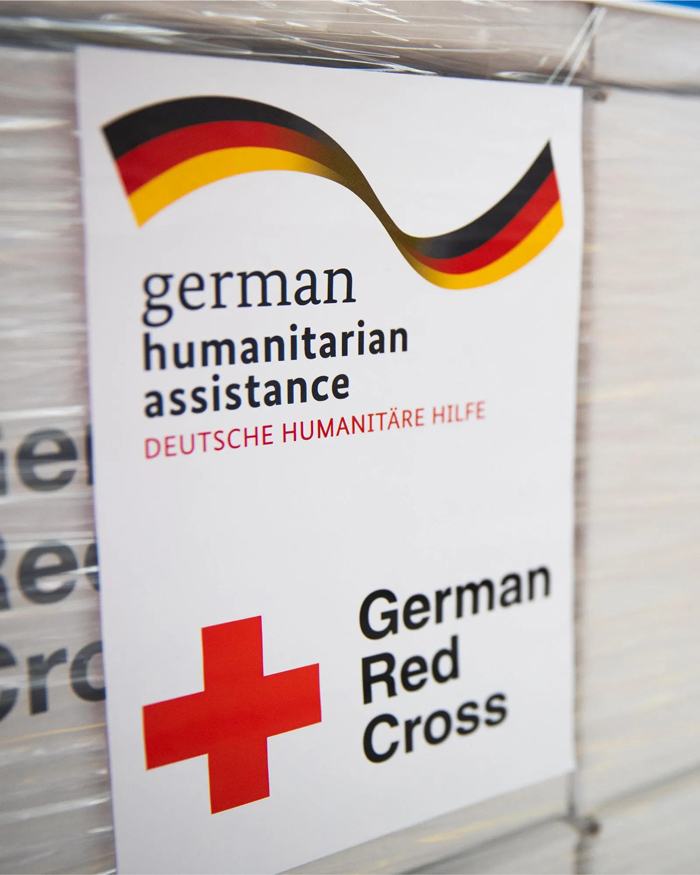
In a business, it’s usually much easier to drive change. Here, we work with the marketing team to develop a strategy, implement it and involve staff. With an NGO, it becomes more complex because everything revolves around a sense of identity and the structures are different too. For example, we’ve been working for the German Red Cross for eight years – an organisation with hundreds of thousands of volunteers. If someone in the XY district branch is responsible for leaflets and banners and suddenly has to work to new design guidelines, for which they might not even have the right software, that’s where change management comes in. We then also consider how we can foster internal participation in the change process without presenting people with a fait accompli.
Would you generally say that it’s more difficult to change brands with a high potential for consumer identification?
Personally, I actually prefer projects like that. The key thing is simply to be aware of this from the outset and to be prepared accordingly. With brands that have a high potential for consumer identification, we work closely with the clients to analyse the context in detail and ask which opinion leaders we absolutely must involve. It’s important to clearly define the scope and ask: How much involvement should there be? And how do you manage to make the necessary change understandable to everyone involved?
Will AI mean that, in future, every project will be quantified and every design path tested?
I believe there’s a middle ground between the two. With performance-driven D2C brands, we can use certain tests to track clear results following a relaunch. Ultimately, we all want to develop something that works – not something that just looks good in the details. AI has been part of our work for quite some time now. However, we haven’t yet had a case that was entirely AI-generated. I can’t say just yet where its use will lead. At Sherpa, we have a three-person task force that works entirely with AI support and challenges our processes to see just how far the tools have actually come. In my view, the real challenge lies elsewhere: on social media, you often come across these videos of village festivals where all the posters look exactly the same. What I’m getting at is this: nowadays, anyone can design a poster, a website or an app with very limited resources. The results are often unsuccessful, precisely because there are no specialists behind them. And this creates a tension: the process of democratisation on the one hand, and dwindling diversity on the other.
In your twelve years of day-to-day agency work, has there been a particular case that moved you deeply?
There are many. But there’s one case that springs to mind which, quite literally, moved both the client and me at the same time. It involves a company with around a hundred employees – one you might not necessarily be familiar with, but which has been operating very successfully in the market for several years now. A generational handover was on the cards there, and we supported them through the rebranding process. The outgoing owner had built up the company over the years and was now handing over the reins to his successor. During our final presentation, he broke down in tears – out of happiness and, no doubt, a touch of wistfulness. That was truly a very special moment, which for me illustrates that it’s not just iconic brands that can move people. Medium-sized brands, pro bono projects and NGOs can do so in their own way, too.
The path to the summit is often rocky and steep. How do you manage not to lose anyone along the way and to grow against all the odds?
In my view, a good working atmosphere and high standards are not mutually exclusive. Rather, they are interdependent. When it comes to attracting good people, a sense of identification certainly plays a key role. Furthermore, we want to relieve our staff of that classic “either/or” choice between “work” and “life”.
You say: “We’ve only just arrived at base camp.” Where is Sherpa’s journey heading, and what about your own journey as “Creative of the Year”?
We’ve just reached a good level. Our next stage is the summit. In other words, whenever a rebranding project comes up anywhere in the German-speaking world, the name Sherpa should come to mind. For my part, I want to continue supporting people on their journey and find joy in my role. I actually ask myself the same question every year: “Do I still enjoy what I do?” So far, I’ve always been able to answer with a resounding “Yes”. At the same time, I’m eager and open to new challenges.
The interview was conducted by Saskia Diehl.