“We’ve thought like a tech start-up right from the start”

Jury’s statement
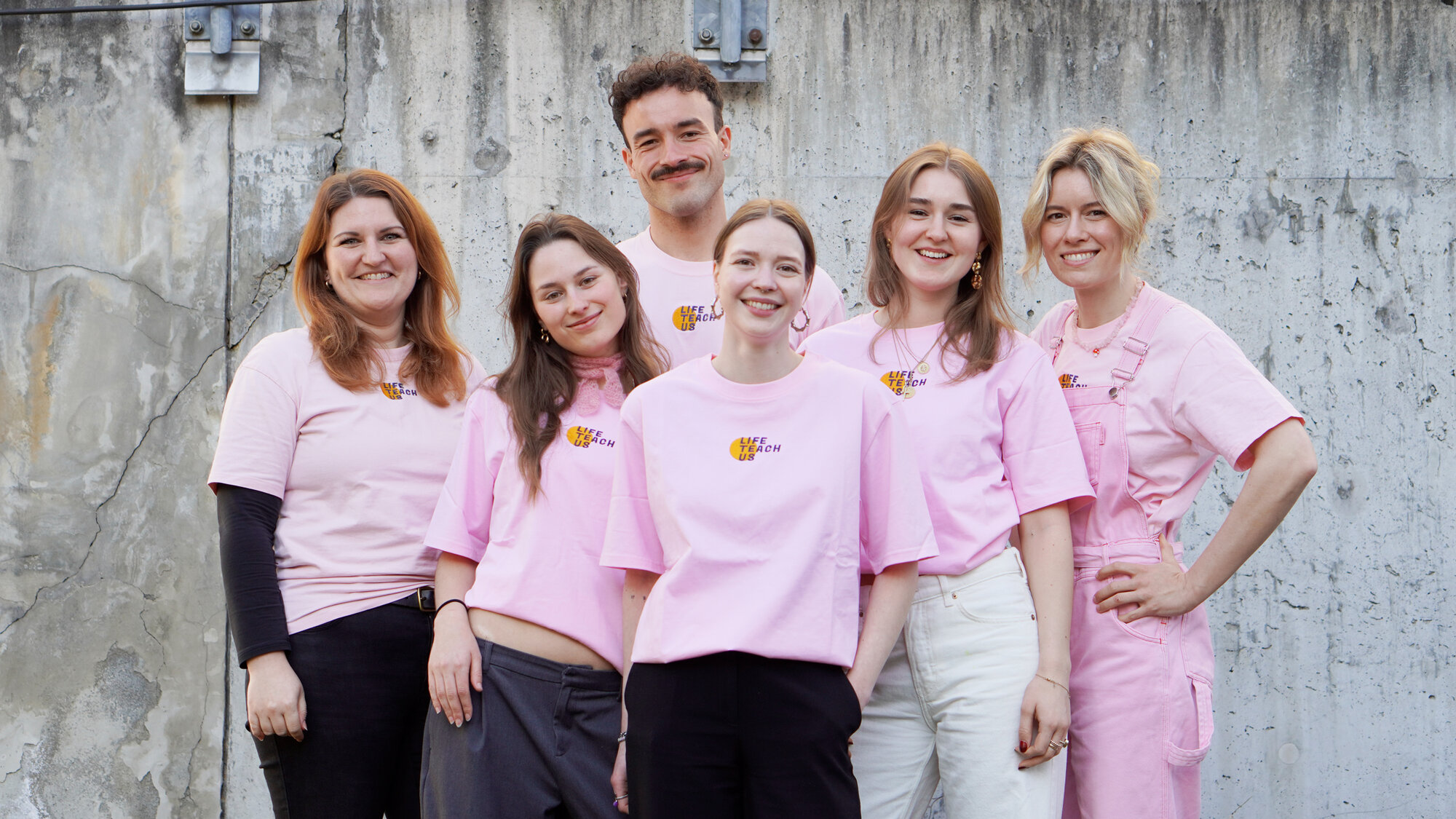
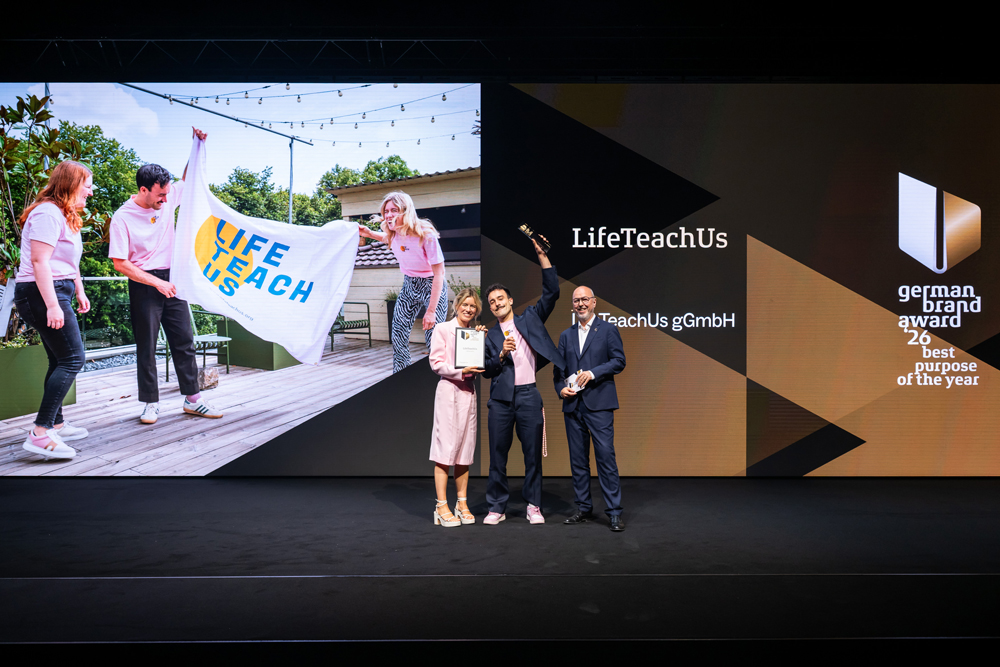
With a growing network of volunteers and partner schools, LifeTeachUs is creating a school subject that features in no curriculum: “LifeLessons” prepare pupils for real life. The jury commends the way in which this non-profit organisation consistently upholds this ethos across all touchpoints – from its philosophy and product to its communication. What was particularly impressive was that LifeTeachUs does not merely present educational equity as a message, but brings it to life as a way of thinking. In this way, the brand itself becomes proof of what social cohesion can achieve.
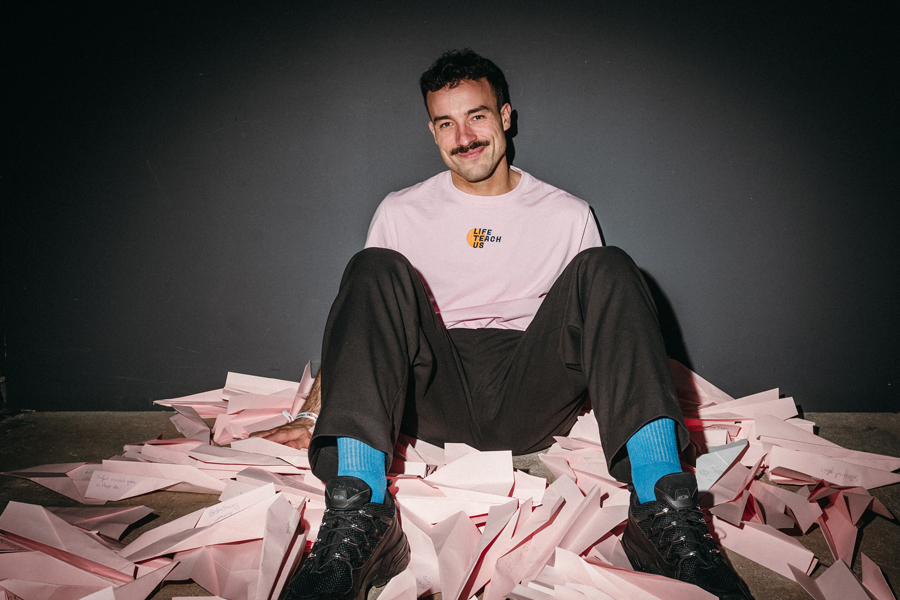
Interview with Ludwig Thied
The “Best Purpose of the Year” award recognises organisations that not only practise social responsibility but also make it a clearly recognisable part of their brand. What does this award mean for LifeTeachUs, and how do you yourselves define your “Best Purpose”?
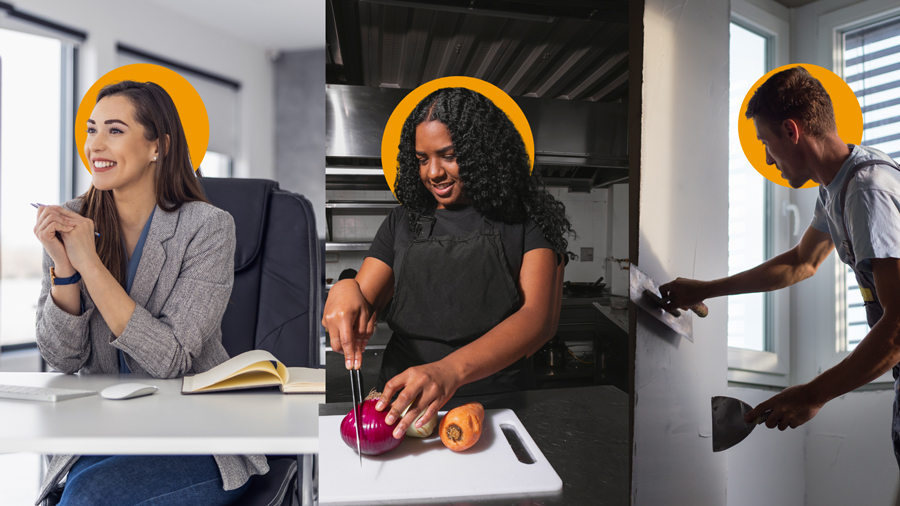
The award means an enormous amount to us. It highlights exactly what LifeTeachUs has been all about since day one: Education must not remain the responsibility of individual institutions, but must become a responsibility for society as a whole. Our purpose is therefore not simply based on a slogan or a communication strategy. It is embedded directly in our infrastructure, in our app, and in every single visit to schools. We bring people with real-life experience into schools exactly when they are needed – when lessons are cancelled, for career guidance, or to complement subject-specific teaching. For us, “Best Purpose” does not mean talking as eloquently as possible about social responsibility, but making it tangible. When a tradesperson spontaneously visits a class, a former homeless person shares their story, or an engineer explains to young people what their day-to-day work involves, these encounters create a genuine social impact. This is precisely where we see our purpose.
The jury emphasises that responsible entrepreneurship must not merely be communicated, but must be “consistently, distinctively and tangibly experienced”. Where do you draw the line between genuine purpose and cleverly packaged marketing?
In marketing, purpose is often treated like an add-on: attractive campaigns, grand words, but few structural consequences. Genuine purpose, on the other hand, changes decisions, priorities and even the way an organisation operates. For us, this is evident in the fact that we are structured as a non-profit, have operated with limited resources for many years and yet consistently focus on impact rather than short-term monetisation. You can often recognise genuine purpose by the fact that an organisation sticks to its mission even when things get uncomfortable. In the education sector in particular, change takes a long time, processes are slow, and many things don’t scale immediately. If you carry on regardless because you truly believe in the social relevance of your work, communication becomes a stance.
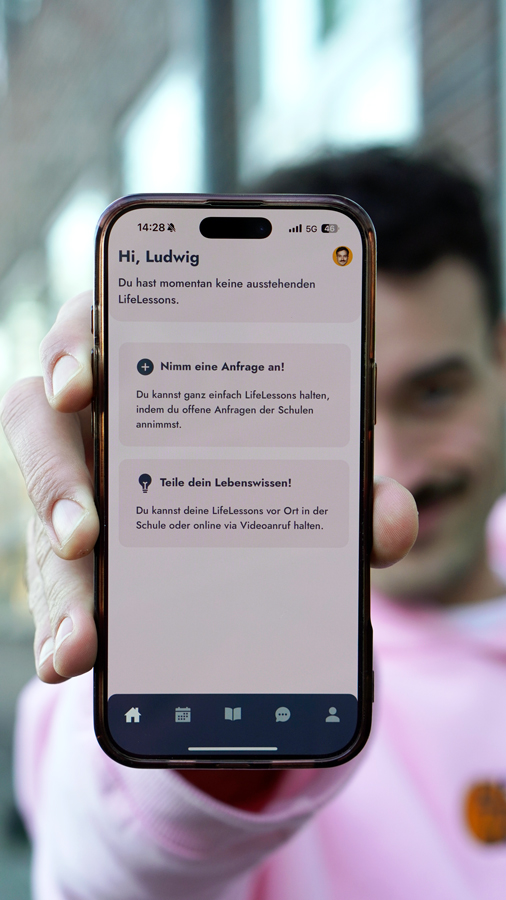
Using an app, you coordinate volunteers from all walks of life and partner schools. In what are known as “LifeLessons”, they then bring life lessons to school, in line with your slogan. How did you and Dr Simon Bründl come up with this idea, and what motivated you to found LifeTeachUs in 2022?
I was particularly moved by an encounter with a refugee woman who came to my school at the time to tell her story. That single hour had a greater impact on me than many traditional lessons – many of which had been cancelled. It made me realise just how much real encounters can change perspectives. Later, this led to the question: why isn’t there actually an infrastructure that brings precisely these kinds of people into schools in a flexible way? In other words, a kind of platform through which schools can easily request people with experience, knowledge and stories. Together with Dr Simon Bründl, I then put this idea into practice in 2022. It was important to us not to create yet another theoretical educational project, but a system that truly makes collective knowledge accessible – spontaneously, flexibly and scalably.
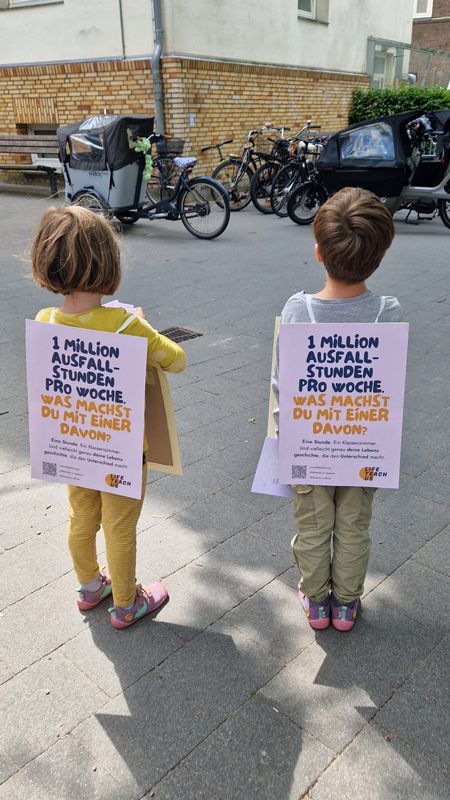
You highlight a systemic problem using two alarmingly specific figures: 59% of all pupils feel inadequately prepared for life, and one million lessons are cancelled every week in German schools. How did you develop a scalable concept based on this?
It became clear to us early on that we didn’t simply want to be a local volunteering project dependent on individual contacts. That’s why we thought like a tech start-up from the very beginning – just in the non-profit sector. The key question was: how do we create an infrastructure that makes volunteering as easy as booking through Uber or Airbnb? Today, schools can use our app to request specific topics, and suitable LifeTeachers are notified at the same time. This creates speed and scalability. At the same time, we are standardising digital processes such as qualification, criminal record checks, teaching guides and matching. That is precisely what makes the difference: it is not individual workshops that scale, but the infrastructure behind them.
The German education system is sluggish and structurally conservative. How is LifeTeachUs managing to gain a foothold within the system, and what are the biggest obstacles?
The education system is indeed extremely structurally conservative. At the same time, however, we are noticing that the pressure is now enormous – due to a shortage of teachers, cancelled lessons and the question of how young people can be better prepared for life. Our advantage is that we do not work against schools, but with them. We do not see ourselves as a replacement for teachers, but as a complement and a source of relief. The greatest resistance often arises where new models do not initially fit into existing ways of thinking. Many ask at the start: “Is that even allowed?” or “Can it work?” But as soon as the first LifeLessons take place and schools experience how professionally and effectively the concept works, perceptions change very quickly. We now work with hundreds of schools and can see that trust is growing steadily.
When was the moment your charitable project became a brand?
When people started to identify emotionally with LifeTeachUs … For instance, when teachers wrote to us saying that a single LifeLesson had transformed their class. When people signed up as LifeTeachers of their own accord, even though they didn’t know us personally beforehand. Or when companies, the media and politicians suddenly approached us because they realised that LifeTeachUs is based on an idea that resonates with society as a whole. For me, a brand isn’t created by logos or design, but when people start wanting to be part of a mission.
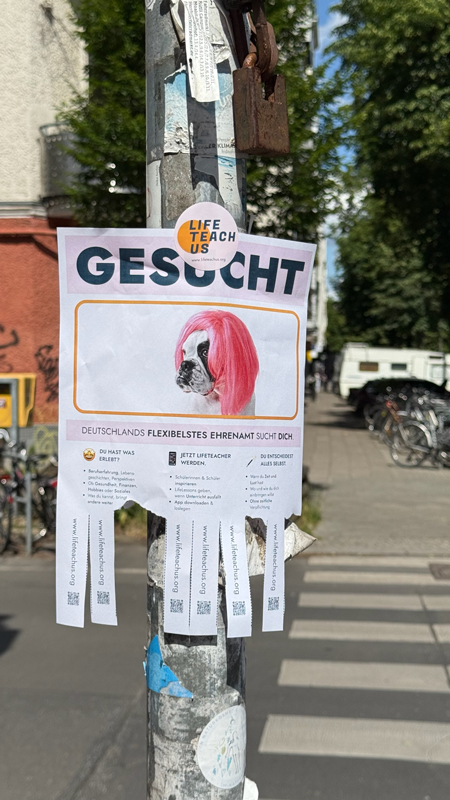
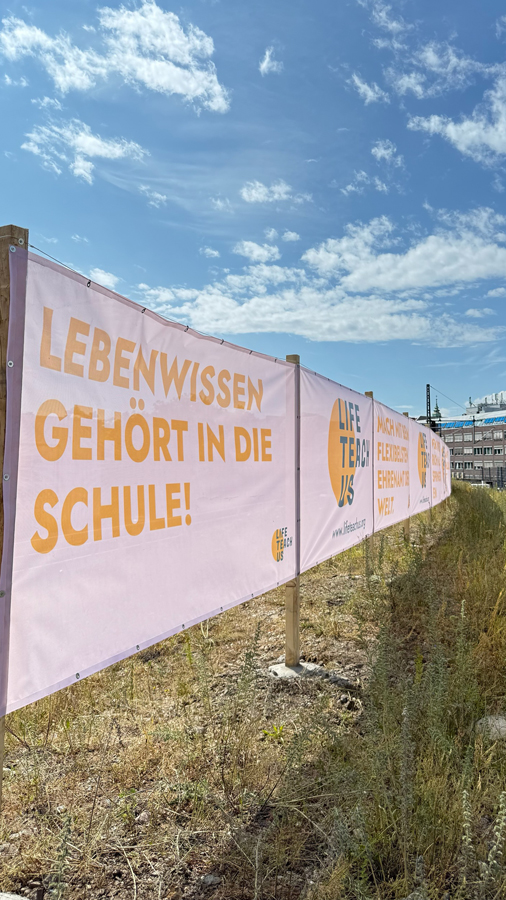
You use very clear language and a colourful, accessible visual style. Whenever you appear – whether in person or on social media – you always wear bright pink. Was that a deliberate branding decision from the outset, or did this identity develop organically?
The pink was initially more of an intuitive decision than a strategic one. However, we quickly realised that educational communication often comes across as heavy, grey and institutional. We wanted to do things differently and present ourselves as accessible, optimistic and modern. In the education sector in particular, strong visual communication can help draw attention to issues that would otherwise be overlooked. Over time, this colour scheme has become a clear distinguishing feature, so that many people associate the pink directly with LifeTeachUs. This shows how important consistent brand management is, even for non-profit organisations.
LifeTeachUs is aimed at a wide range of different audiences. How do you maintain a consistent brand identity without becoming generic?
We always convey the same message. Whether we’re talking to schools, businesses or volunteers, it’s always about social cohesion, life skills and how we can better prepare young people for real life. The language, examples and formats change depending on the target group, but the mission remains the same. That is precisely what creates consistency. We also try to communicate very clearly, directly and in an approachable way. NGOs in particular sometimes run the risk of coming across as either too bureaucratic or too arbitrary.
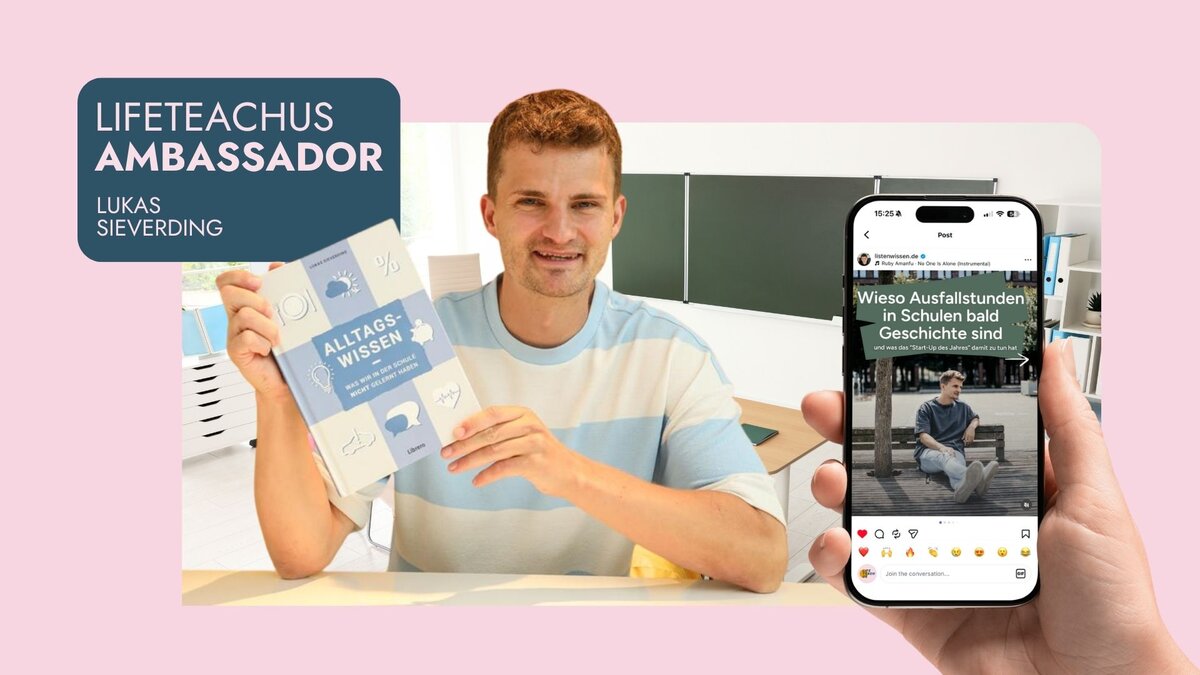
Lukas Sieverding, one of Germany’s leading creators of everyday knowledge, was recently introduced as your brand ambassador. What role do public figures play in a brand’s credibility, and what was the deciding factor in your choice?
It was important to us not to have a traditional advertising ambassador, but someone who truly understands the concept, actively contributes and is authentic. People can tell very quickly whether collaborations are purely strategic or whether there is genuine conviction behind them. So, particularly for a purpose-driven brand like ours, it was crucial that the partnership was credible. This is exactly the case with Lukas Sieverding: for years, his content has revolved around imparting knowledge and everyday education – precisely the topics we are also concerned with.
You are now active in numerous German cities and are attracting growing media interest. How do you manage this growth without compromising the quality of the LifeLessons or the integrity of the brand?
That is indeed one of the biggest challenges. That is why we invest heavily in standardisation and digital processes. Every LifeLesson is based on verified guidelines, our LifeTeachers are qualified, and schools provide continuous feedback. At the same time, we ensure that our brand does not become arbitrary. Just because we are growing rapidly does not mean we have to take on every partnership or every opportunity to expand our reach. Trust is the most important asset, particularly in the non-profit sector. Protecting this in the long term is more important than short-term growth.
At LifeTeachUs, “impact” isn’t just a buzzword. You work with the concept of “Impact Producers”. How do you measure and communicate social impact in a way that remains credible?
Of course, we track metrics such as the number of schools reached, registered LifeTeachers, or the volume of assignments. But qualitative changes – such as new perspectives, encounters, or social participation – are just as important. For us, the term “Impact Producer” therefore also describes an attitude. People shouldn’t just consume or watch from the sidelines but should be able to become part of social change themselves. Honesty is key here. Communication about impact immediately loses credibility if it is exaggerated or presented as too perfect.
What advice would you give to an NGO or charity that is committed to social responsibility but does not yet have a clear brand identity?
I would advise them to start by defining their core mission with radical honesty. Many organisations try to cover as many issues as possible at once. However, strong brands usually emerge where there is a clear focus. Furthermore, one should not only document actual impact, but make it tangible. People rarely remember abstract strategy papers, but they do remember concrete stories, encounters and images. And finally: NGOs need to be bolder in their communication, because good work alone is no longer enough today. If social impact is to be achieved, visibility must be part of the strategy.
Where do you want LifeTeachUs to be in five years’ time?
In five years’ time, LifeTeachUs should be an integral part of the educational landscape and a natural complement to the classroom. We want schools across Germany to be able to access collective knowledge at any time. We want young people to regularly meet people who give them genuine insights into life. And that engagement becomes just as flexible and natural as other digital services. At the same time, we want to demonstrate internationally that education can be reimagined: more open, more human and more closely connected to society. I truly believe that education is the last great opportunity for change that we still have. And that is precisely why we must start to support it together.
The interview was conducted by Sabrina Günther.